
What Is an Electronic Apex Locator? The Key to Successful Root Canal Therapy
If you’ve ever had or been told you need a root canal, you know the procedure involves cleaning out the inside of your tooth’s root. But have you ever wondered how your dentist knows exactly where that root ends? The answer lies in a sophisticated piece of dental technology: the Electronic Apex Locator .
Think of it as a high-precision GPS for your tooth. This small but mighty device has revolutionized endodontics (the field of root canal treatments), making the procedure safer, faster, and significantly more successful.
This guide will explain what an electronic apex locator is used for, how it works, and why it’s considered the gold standard in modern dentistry.
What Is an Electronic Apex Locator Used For?
The primary and most critical use of an electronic apex locator is to accurately determine the working length of a root canal.
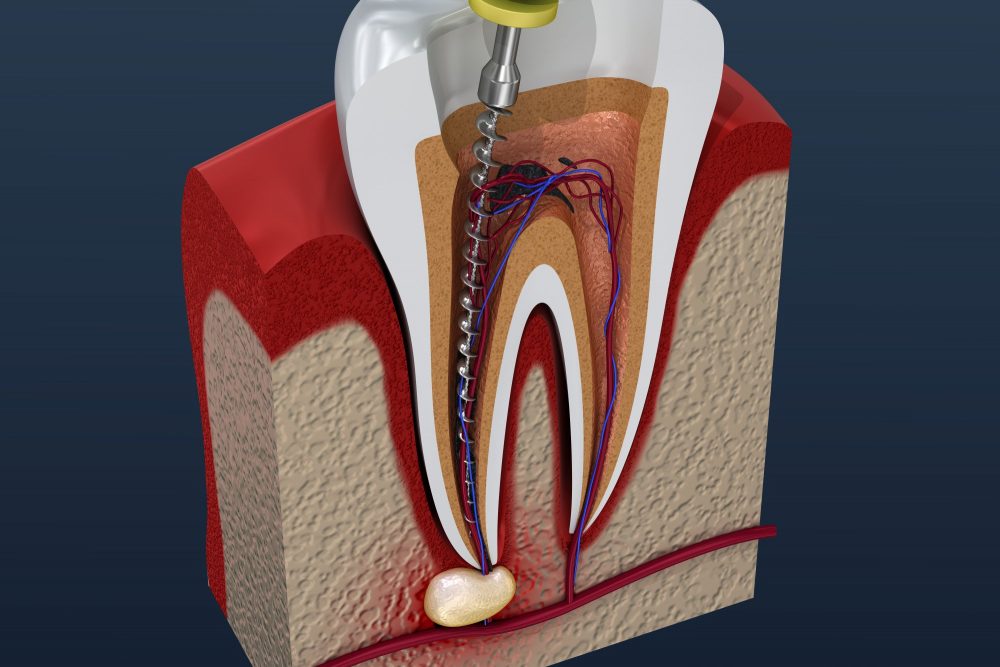
The “working length” is the exact distance from a reference point on the crown of the tooth to the very tip of its root, where a tiny opening called the apical foramen is located. This foramen is where the nerve and blood vessels originally entered the tooth.
Precisely locating this endpoint is non-negotiable for a successful root canal treatment.
Here’s why:
To Prevent Over-instrumentation and Over-filling
If the dental root canal files and filling materials go beyond the apical foramen, they can injure the sensitive surrounding tissues, including the bone and periodontal ligament. This can lead to:
-
- Significant post-operative pain and inflammation.
-
- Delayed healing.
- Potential failure of the entire treatment.
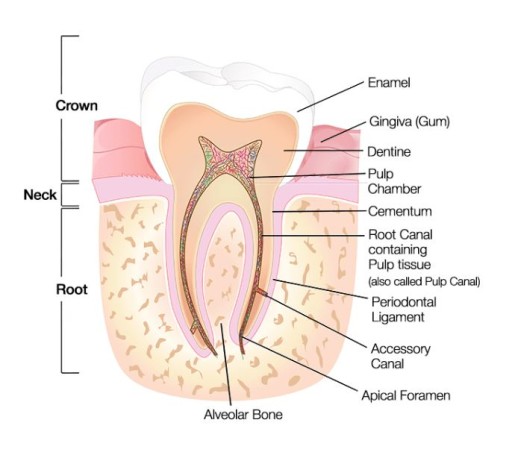
Apical foramen
To Prevent Under-filling and Incomplete Cleaning
If the measurement is too short, the last portion of the root canal will not be cleaned or sealed. This leaves behind infected tissue, debris, and bacteria. This untreated section becomes a hidden reservoir for infection, which can lead to:
-
- Persistent pain or a dull ache.
-
- The formation of an abscess.
-
- The eventual need to retreat the tooth or even extract it.
The electronic apex locator guides the dentist to this “just right” point, ensuring the entire canal is treated without trespassing into the surrounding tissue.
How Does an Electronic Apex Locator Work?
The technology behind an Electronic apex locator is based on a principle called bioelectrical impedance. It sounds complex, but the concept is straightforward.
Different tissues in your body have different levels of resistance to a very small, completely safe electrical current. The Electronic apex locator uses this fact to its advantage:
-
- Creating a Circuit: The dentist places a small clip (electrode) on your lip and attaches another clip to the tiny metal root canal file they are using to clean the root canal. This completes a simple electrical circuit that passes through your body. The current is so low you will not feel anything.
-
- Measuring Resistance: As the dentist gently advances the endodontic file down the root canal, the device continuously measures the electrical resistance.
-
- Finding the Apex: The tissue inside the root canal (pulp) has a high electrical resistance. However, the tissue outside the root, in the periodontal ligament, has a much lower, very specific resistance. When the tip of the endodontic file reaches the apical foramen and makes contact with this outer tissue, the resistance value drops to a consistent, known level.
-
- Signaling the Dentist: The electronic apex locator instantly detects this change and alerts the dentist through a visual display (a digital bar graph), a numerical reading, and/or a series of beeps that change in pitch. This signal tells the dentist, with incredible accuracy, “You have reached the end of the canal.”
The Advantages of Using an Electronic Apex Locator
Before Electronic apex locator became widespread, dentists relied on a combination of tactile sensation and multiple X-rays to estimate the root length. electronic apex locators offer significant advantages over this traditional method.
-
- Unparalleled Accuracy: Modern electronic apex locators are incredibly precise, with studies showing accuracy rates of over 97%. They provide a more reliable measurement than a 2D X-ray image of a 3D structure.
-
- Reduced Radiation Exposure: By providing a real-time measurement, electronic apex locators drastically reduce the number of X-rays needed during the procedure. This is safer for both the patient and the dental team.
-
- Increased Efficiency: Pinpointing the working length quickly saves valuable chair time, making the appointment shorter and more comfortable for the patient.
-
- Improved Treatment Outcomes: By ensuring perfect cleaning and sealing of the entire canal system, electronic apex locators directly contribute to a higher long-term success rate for root canal therapy.
Electronic apex locator vs. Traditional Radiography (X-rays)
It’s important to note that electronic apex locators don’t completely replace X-rays. Radiographs are still essential for diagnosing the problem and for evaluating the final filled root canal.
Instead, the electronic apex locator works in synergy with X-rays. A dentist will typically take an initial X-ray to get a general idea of the root anatomy and a final X-ray to confirm the quality of the fill. The electronic apex locator’s role is to perfect the crucial step of length determination during the procedure, minimizing the need for intermediate X-rays.
The electronic apex locator is a testament to how technology enhances dental care. By providing a safe, reliable, and highly accurate method for measuring root canal length, it empowers dentists to perform root canal therapy with the utmost precision.
So, the next time you hear that “clip on the lip” mentioned in a dental setting, you’ll know it’s part of a sophisticated system ensuring your treatment is as effective and successful as possible.


